
Centre for Complex Healthcare

RN-led nationally
Person-centred planning
NDIS-aligned practice
Welcome to the Centre for Complex Healthcare.
Supporting a person with complex healthcare needs requires clinical judgement, coordinated planning and a capable workforce working together around the person.
Hear from Deb Stone RN about why the Centre exists and how Medecs connects clinical assessment, care planning, training and competency verification.
Deb Stone RN - Managing Director & Director Clinical Services
Clinical direction, delivered daily.
-1.png?width=250&height=250&name=Medecs%20NDIS%20Logo%20FINAL_2%20(1)-1.png "Medecs NDIS Logo FINAL_2 (1)-1")
Clinical assessment
Understand the person's health needs, risks, environment and current support arrangements.
Care planning
Develop or update practical, person-centred plans that guide the support team.
Workforce training
Build knowledge and confidence for the individual's specific complex healthcare needs.
Competency verification
Observe practice, verify capability and document evidence for organisational assurance.
Review & support
Respond to change, coordinate reviews and keep plans and workforce capability current.
Strong clinical management supports safer practice and better outcomes.
Clinical authority, practical delivery
Experienced clinicians. One accountable relationship — a single point of contact across assessment, planning, training and verification, rather than juggling separate clinicians at each stage.
Led by Deb Stone RN, Director of Clinical Services, our clinical management team connects person-centred clinical assessment, care planning, workforce training and competency verification. They bring clinical judgement and practical sector experience to every stage of the support pathway.
Assess · Plan · Train · Verify · Review
Capability built around the person, not a generic course.
Diabetes support
Epilepsy & seizure management
Complex bowel care
PEG feeding
Tracheostomy support
Complex wound care
Dysphagia support
Medication management
Other supports tailored to the person
.png?width=1536&height=1024&name=Medecs-Coordination-Team-Approved-Stock-Cast%20(1).png)
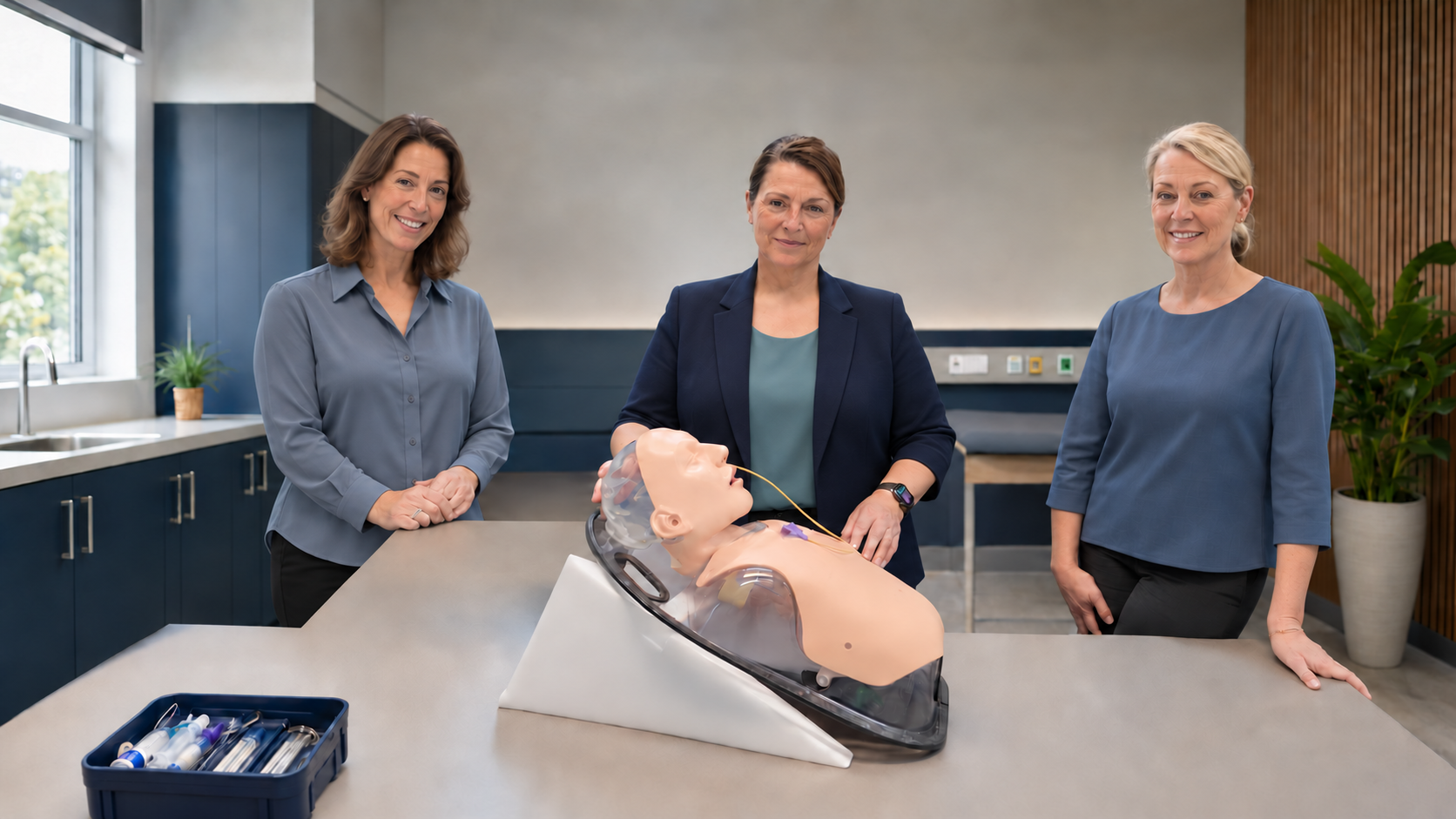
Clinical coordination that keeps everyone connected.
Our coordination team is the reliable human link between participants, families, providers, support coordinators, clinicians and support workers. They organise the details, keep communication moving and help ensure the right clinical support happens at the right time.
Frequently asked questions
What is the Medecs Centre for Complex Healthcare?
The Centre brings clinical assessment, care planning, participant-specific workforce training, competency verification and ongoing review together under RN-led clinical oversight. It provides one coordinated pathway rather than requiring participants and providers to engage separate clinicians at each stage.
Who does the Centre support?
The Centre supports people with disability who have complex healthcare needs, along with their families, support workers and service providers. Enquiries can be made by participants, nominees, providers, support coordinators or other authorised representatives.
Is complex healthcare for people with disability the same as NDIS high intensity support?
Yes. Complex healthcare is the term Medecs uses for supports recognised by the NDIS as high intensity daily personal activities. These supports require participant-specific planning, appropriately skilled workers and training aligned with the participant’s individual health needs and relevant NDIS requirements.
Is complex healthcare support available across Australia?
Yes. Medecs supports participants and providers nationally using a combination of clinical consultation, virtual delivery and coordinated service arrangements. Available delivery options depend on the participant’s needs, the clinical support required and their location.
When should we request complex healthcare support?
Support may be needed when a participant develops a new health need, leaves hospital, changes provider, has an outdated care plan, experiences recurring incidents or requires staff training and competency verification for a higher-risk support activity.
What complex healthcare and NDIS high intensity support needs does Medecs support?
The Medecs Centre for Complex Healthcare supports diabetes, epilepsy and seizures, complex bowel and urinary care, enteral feeding including PEG, tracheostomy and respiratory support, dysphagia and mealtime management, stoma care, wound care, anaphylaxis, palliative care and medication management. Services are tailored to the person, their support needs and the provider.
Can the Medecs clinical team assess participants and develop or update their care plans?
Yes. Medecs is a registered NDIS provider for Community Nursing Care. (Registration ID: 4-433C-362). Our registered nurses can assess a participant’s complex healthcare needs and develop a practical, person-centred care plan. Existing plans can also be reviewed and updated when the participant’s health, risks, treatment or support needs change.
What does the complete Medecs support pathway include?
The pathway can include clinical assessment, development or review of the participant’s care plan, training for the workers providing support, practical competency verification and ongoing review. Services are arranged according to the participant’s needs and the provider’s responsibilities.
What is a participant-specific healthcare plan?
A participant-specific healthcare plan translates the person’s assessed health needs into practical instructions for their support team. It should address routine care, individual risks, warning signs, incident responses, emergency actions and escalation requirements.
Why is participant-specific training important?
A generic course cannot address every person’s condition, equipment, routines, risks and escalation needs. Participant-specific training helps workers understand how to provide the required support safely and consistently for the individual they are supporting.
What is the difference between training and competency verification?
Training develops knowledge and skills. Competency verification assesses whether a worker can apply them safely in practice. For higher-risk supports, completing training alone may not provide sufficient evidence that the worker can perform the participant’s required support competently.
How does the centre support the NDIS Practice Standards?
Medecs aligns relevant planning, training and competency processes with the NDIS Practice Standards and applicable High Intensity Support Skills Descriptors. This helps providers strengthen workforce capability and maintain evidence supporting safer service delivery, but does not itself certify or guarantee compliance.
When should a participant’s healthcare plan be reviewed?
A plan should be reviewed within its stated review period and whenever the participant’s health, medication, equipment, treatment or support needs change. A review may also be required following an incident, hospital admission, GP advice or concern about the plan’s effectiveness.
How do we request support from the Centre?
Complete the Request clinical support form with information about the participant’s needs and the assistance required. Our coordination team will review the enquiry, clarify any necessary details and explain the recommended pathway, anticipated timeframe and costs before services proceed.
Contact the Clincal Team
Bring the plan, the worker and safe practice together