
Medication records clearly identify the participant, medication, dosage and information needed for safe administration.
Medication Management
Can you demonstrate that your workforce is medication capable? Medication administration is one of the highest-risk responsibilities disability support workers undertake, and a course certificate confirms attendance—not safe application.

Nationally available
Mapped to NDIS requirements
Clinical nurse-led verification
Individual & organisational reporting
Training records are a starting point. Capability must be demonstrated.
Medecs helps disability, aged care and community service providers build and demonstrate medication workforce capability through clinically developed education, Clinical Nurse competency verification and organisational governance reporting.
The governance question is not simply, "Have our workers completed training?" It is, "Can we demonstrate they are competent to administer medication safely for each person we support?"
What providers must be able to demonstrate
The outcome: confidence that medication is administered, stored and monitored safely — and errors prevented.
Workers understand medication effects, side effects and the action required following an incident.
Medication is securely stored, easily identified and accessed only by appropriately trained workers.
One national framework. Three levels of accountability.
Safe medication support depends on how national expectations, jurisdictional requirements and organisational systems work together.
National
NDIS Practice Standards and Code of Conduct
Jurisdictional
State and territory medicines requirements
Organisational
Policies, systems, training, verification and oversight
How confident are you in your medication workforce?
Take the free NDIS Medication Workforce Assurance Check to explore how medication requirements are reflected in your workforce systems and everyday practice.
In approximately three minutes, receive:
- Your medication workforce assurance snapshot
- Questions that may warrant closer review
- Suggested next steps based on your responses
This introductory self-assessment does not assess or confirm NDIS compliance and does not replace an independent audit or clinical review.
Clinically developed checklist. Informed by the NDIS framework.
Nine practical questions developed by our clinical team and informed by the NDIS Practice Standards and Quality Indicators — Management of Medication.
Medication records
Clear, accurate and participant-specific records
Worker knowledge and capability
Medication knowledge, capability and incident response
Safe medication practices
Identification, secure storage and trained access
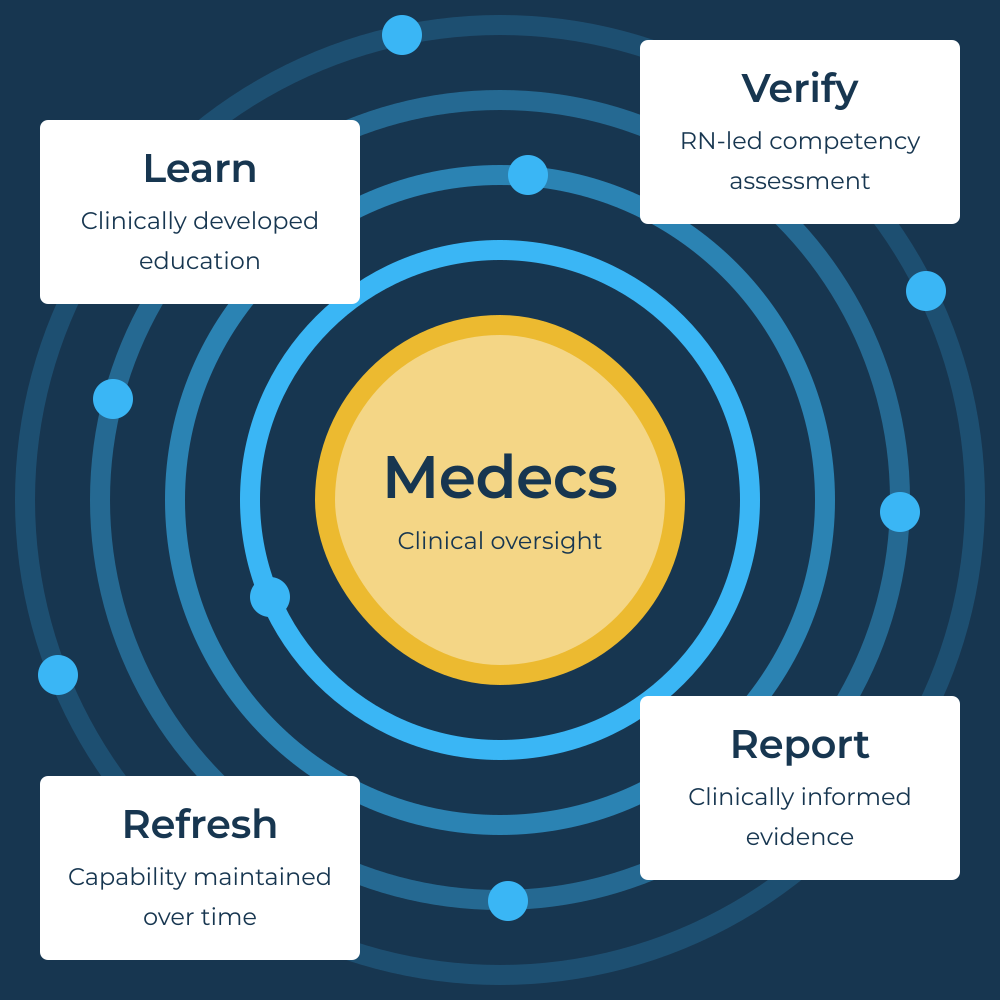
The clinical authority behind medication workforce capability
Medication workforce capability depends on more than learning content. Medecs brings experienced clinical leadership across the entire pathway - from program development and competency verification to workforce reporting and recommendations for improvement.
Clinical oversight turns training activity into evidence leaders can act on.
What your organisation receives
Clinically developed medication education
Realistic medication scenarios
Clinical Nurse-led competency verification
Individual competency outcomes
Organisational Governance & Capability Report
Recommendations, refresh and reassessment pathways

Verification grounded in your organisation's systems
Medication competency is most meaningful when workers demonstrate practice within the systems they encounter at work.
- Medication policies and administration records
- Incident, error and escalation processes
- Participant-specific documentation
- Worker roles, supervision and authorisation

Rize Support project — Virtual, clinically led learning connected to practical medication capability.
How Rize Support strengthened medication workforce assurance
Medecs delivered the NDIS Medication Management Program virtually to Rize Support staff working in pairs. Each pair completed the learning with a simulated medication practice kit, supporting practical discussion, application and assessment.
Medication education, competency verification and organisational reporting helped identify workforce gaps, target development priorities and strengthen leadership visibility.

The level of clinical leadership Medecs brings to you
- Clinical Nurse-led program delivery and verification
- Decades of combined clinical and sector experience
- Thousands of support workers trained annually
- Experience partnering with hundreds of providers
- Individual and provider evidence pathways
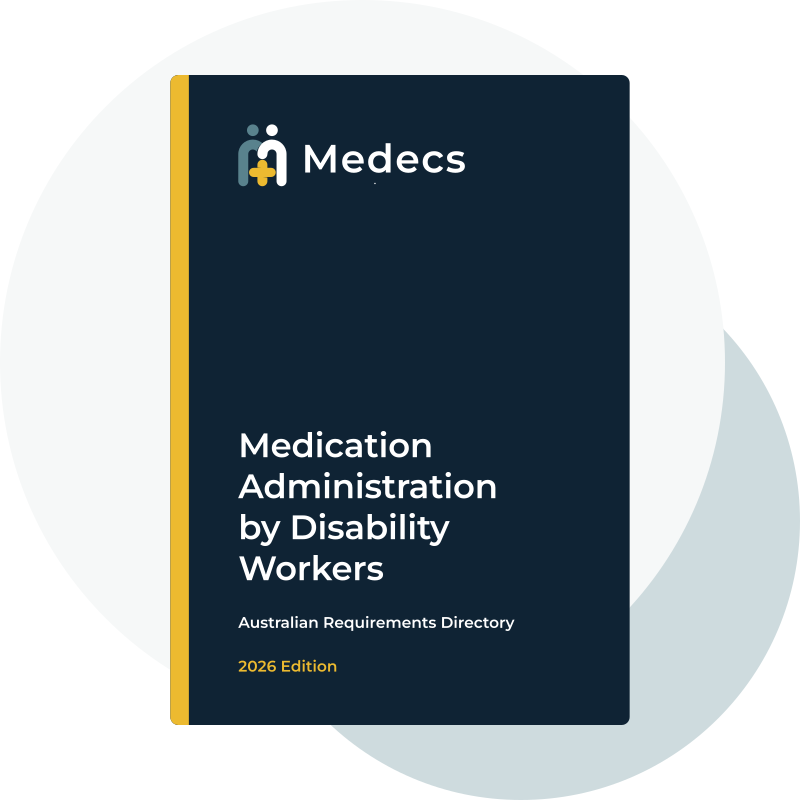
The Australian Requirements Directory
Medicines law is set state by state, so the rules for disability support workers change depending on where you work. Select your jurisdiction for a short summary of the position that applies.
Explore the program and indicative pricing.
Understand the clinical pathway, likely investment and options for larger workforce implementation.
From approximately
$290 + GST
Per worker
Using the standard paired verification model for two learners. Includes online learning, learner demonstration kit, clinical nurse-led verification and organisational reporting.
Final pricing depends on workforce size, delivery configuration, staff learning and organisational requirements.
NDIS Medication Workforce Capability Program Guide
Download the guide for detailed information about:
- How the clinically-led program operates
- Clinical Nurse-led verification activities
- Individual and provider reporting
- Annual refresher and reassessment pathways informed by evidence.
- Volume and enterprise pricing
Frequently asked questions
What medication administration requirements apply to disability support workers across Australia?
Medication administration requirements and regulatory guidance differ between Australian states and territories. The Australian Requirements Directory: Medication Administration by Disability Support Workers provides NDIS and disability service providers with concise jurisdictional summaries based on information supplied by relevant government agencies.
What are the NDIS medication management requirements for disability providers?
NDIS providers must maintain accurate medication records, manage medicines securely and ensure access is limited to appropriately trained workers. Workers administering medication must understand its purpose, effects, potential side effects and incident procedures. Supports must also be delivered safely and competently, with care and skill.
NDIS sources: NDIS Quality and Safeguards Commission, NDIS Practice Standards and Quality Indicators—Management of Medication; NDIS Code of Conduct.
What medication training and competency do disability support workers need?
Outside Tasmania, the government responses reviewed did not identify a specific disability-sector medication qualification. Providers must still determine suitable learning, verify practical competency and authorise workers to ensure medications are delivered safely and competently, with care and skill.
What is the difference between medication training and competency verification?
Medication training develops a worker’s knowledge and practical skills. Competency verification by a Clinical Nurse, assesses whether the worker can apply that learning safely and consistently through demonstration, simulated scenarios, questioning, documentation and incident-response activities. Course completion alone does not necessarily demonstrate practical competency within the worker’s role.
What is included in the Medecs Medication Workforce Capability Program?
The program includes clinically developed online medication learning, a learner demonstration and practice kit, Clinical Nurse-led practical competency verification, individual outcome records and organisational reporting. Providers also receive identified workforce findings and recommended actions to support medication governance and continuous improvement.
How is practical medication competency verified through virtual delivery?
Workers participate nationally through structured virtual verification, generally using Medecs’ paired assessment model. A Clinical Nurse observes simulated practical demonstrations and assesses medication knowledge using real-life scenarios, documentation, safety checks and responses to medication incidents. The supplied demonstration kit supports consistent simulated practice and assessment without requiring onsite delivery.
Can Medecs incorporate our medication policies and procedures?
Yes. Relevant organisational policies, procedures, medication records and operational processes can be considered when confirming the program pathway. This helps connect learning and competency verification with the provider’s working environment while maintaining consistent clinical assessment requirements.
What medication competency records and workforce reporting does the provider receive?
Providers receive individual competency outcomes, verification records and applicable completion certificates. The organisational Medication Competency Verification and Governance Report summarises workforce results, recurring knowledge or practice gaps, areas of strength and recommended actions to support oversight, workforce development and medication governance.
How often should disability support workers’ medication competency be reassessed?
Annual reassessment is commonly used to support ongoing workforce assurance. Earlier reassessment may be appropriate following a medication incident, extended absence, change in duties, revised procedures, identified performance concern or significant change in a participant’s medication support needs. Providers should establish reassessment requirements within their governance framework.
What is included in the indicative program price?
Indicative pricing is $290 plus GST per worker using the standard paired verification model. It includes online medication learning, the learner demonstration kit, Clinical Nurse-led competency verification and organisational reporting. Final pricing may vary according to workforce size, delivery configuration, existing learning and organisational requirements. Accordion body copy goes here.
Can your organisation demonstrate medication workforce capability?
Speak with the Medecs clinical team about a medication management, competency verification and reporting solution suited to your workforce.